The PackWAI project (Packaging Ecodesign With Artificial Intelligence) aims to develop a no-code digital platform based on Artificial Intelligence to support packaging manufacturers in the ecodesign of their products.
PackWAI seeks to accelerate the development of more sustainable packaging by reducing costs and time-to-market compared to traditional trial-and-error approaches. At the same time, it aims to democratize the use of AI tools within the packaging sector through an innovative digital solution with a positive impact on companies’ competitiveness and sustainability.
The project is supported by Sociedade Ponto Verde and developed in partnership with SIE, Silvex, and Neutroplast.
Start date: September 2025
Completion date: Ongoing

The NanoPack project aims to develop a scientific and innovative approach to assess the recyclability of plastic packaging through the quantitative study of miscibility between polymers and additives using Molecular Dynamics simulations.
By using nanoscale computational models, the project seeks to support the design of packaging optimized for recyclability, contribute to a technically grounded revision of current compatibility criteria, and support compliance with recyclability targets established by Regulation (EU) 2025/40, while simultaneously reducing costs, development time, and resource consumption.
The project is supported by Sociedade Ponto Verde and developed in partnership with Logoplaste.
Start date: October 2025
Completion date: Ongoing
Open Horizons is a program supported by the European Commission and funded under Horizon Europe, aimed at supporting women-led deep-tech startups by connecting them with real-world challenges from large companies.
During the first month, participants received mentoring and training to develop their business model and proof of concept. The following five months are dedicated to the pilot phase, focused on implementing the solution defined previously.
DIMERA was selected to develop the predictive platform Dimera4Textile (D4T), in collaboration with the industrial partner Elyaf, addressing Challenge 16 focused on predicting textile properties based on MRP data.
Start date: October 2025
Completion date: Ongoing

Da WeZard is a Citizen Science project funded by the IMPETUS program under Horizon Europe.
The project aims to characterize and quantify hazardous household waste (HHW) in Portugal, specifically in the Municipality of Leiria, with the active participation of scouts from the Leiria-Fátima Region.
In addition to quantifying and monitoring HHW, Da WeZard aims to develop a municipal management plan for this type of waste with citizen participation. The project also seeks to raise public awareness and promote waste prevention and recycling through a collaborative citizen science approach.
The project is supported by the Municipality of Leiria, Valorlis, NOVA University Lisbon, IPLeiria, and CNE Leiria-Fátima Region.
Start date: June 2025
Completion date: January 2026
Website: dawezard.dimera.pt
Dimera4Oceans, winner of the Mares Circulares Award in the Innovative Initiatives category promoted by LPN and Coca-Cola, aims to create a revolutionary solution for the efficient removal of microplastics (MPs) from water using magnetic carbon nanotubes (M-CNTs).
The project focuses on developing a Molecular Dynamics computational model to study in detail the interaction between MPs and CNTs, enabling the identification of optimized CNT configurations that maximize microplastic removal efficiency.
Dimera4Oceans aims to achieve a removal efficiency of at least 90% for polyethylene, polypropylene, and polyester microplastics. This pioneering initiative intends to significantly reduce MP pollution in rivers and oceans, protecting biodiversity and ecosystem health.
Start date: January 2025
Completion date: December 2025
Within the scope of the INBETON project, DIMERA tested its Virtual Laboratory. The main challenge faced by Sirolis was reducing the number of tests required to develop concrete mixtures while exploring new formulations at lower cost without compromising the required technical properties.
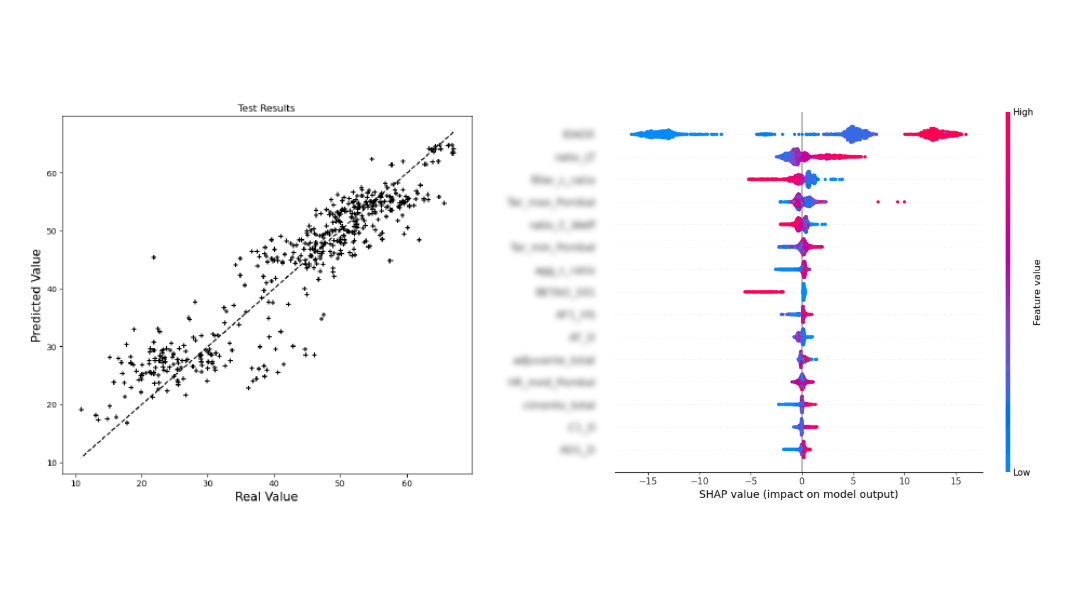
To address this challenge, a test version of the Virtual Laboratory adapted to Sirolis’ practices was developed, consisting of two modules: a prediction module, which estimates the properties of new mixtures, and an exploration module, which identifies innovative low-cost formulations.
The integration of this Artificial Intelligence tool into the Test Bed enabled the evaluation of its performance in a real industrial environment, accelerating the development of more sustainable and efficient precast concrete products.
Benefits for Sirolis:
• Reduction of waste and formulation costs in concrete mixtures;
• Ability to virtually test multiple formulations before physical production;
• Support in selecting raw materials and ideal conditions to achieve desired properties.
The Textile of the Future Test Bed is dedicated to supporting solutions that contribute to the industry of the future by promoting digital transformation and sustainable processes to address global challenges in the textile sector.
Within the pilot developed with Lameirinho, the potential for predicting technical fabric characteristics based on historical data and laboratory results was explored. The initial focus was on yarn properties, enabling the application of advanced analytical methods to accelerate data exploration and identify relevant patterns.
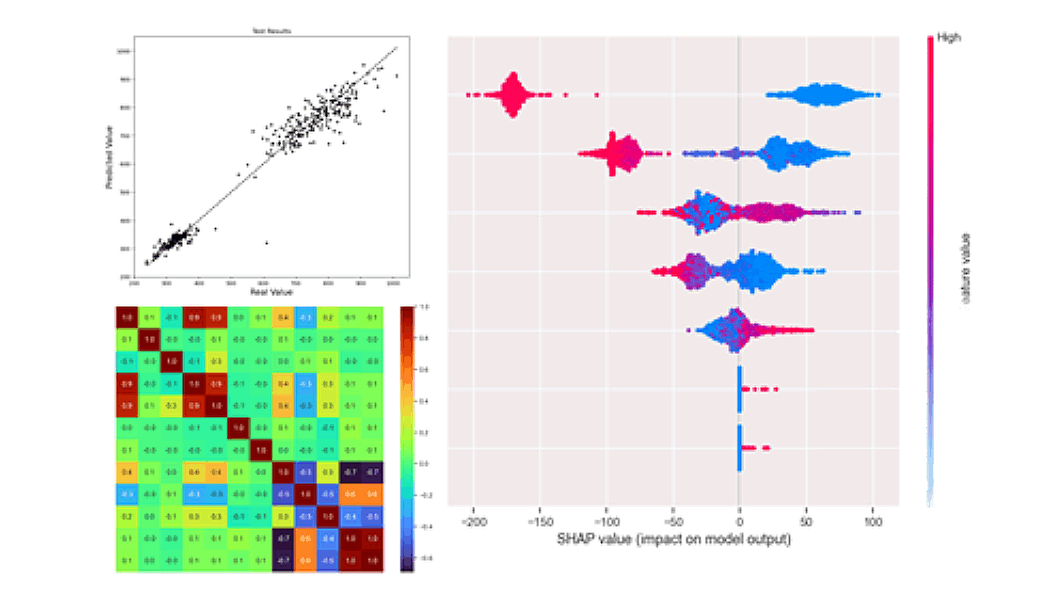
To predict yarn properties (RKM strength), DIMERA developed a no-code Artificial Intelligence solution based on historical data stored in Lameirinho’s ERP system. This easy-to-use solution allows technicians and engineers without prior AI experience to integrate the tool into their workflows.
The results of this Test Bed represent a significant step toward applying data intelligence in the textile sector, with the goal of reducing waste and optimizing development processes.
Benefits for Lameirinho:
• Greater efficiency in the development of new textiles;
• Faster time-to-market through predictive analysis;
• Decision-support tool to improve process efficiency and reduce raw material waste.